
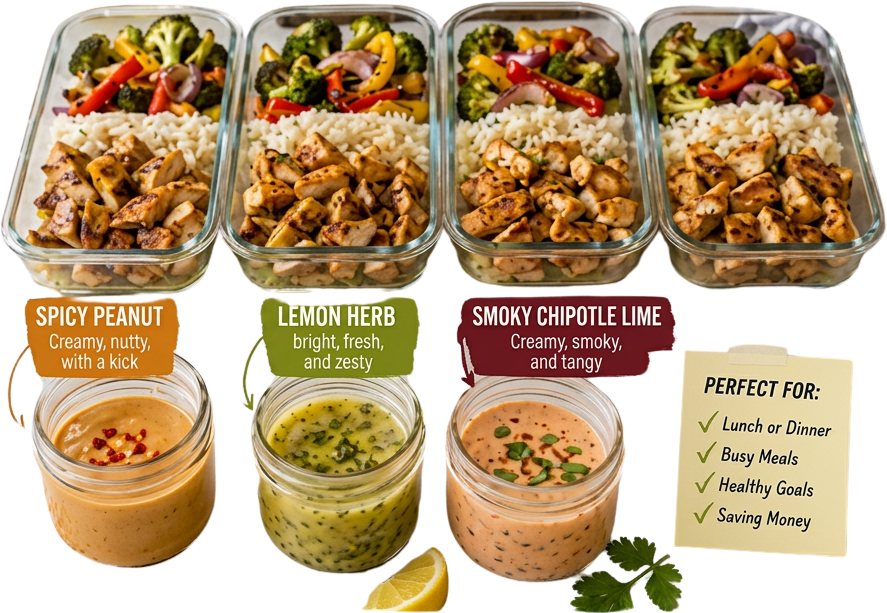
Weekly Chicken Meal Prep Bowls (3 Sauce Variations)
I’ll be honest with you: meal prep used to feel like a chore I dreaded every Sunday. Same chicken, same rice, same broccoli, five days in a row, eaten with the enthusiasm of someone doing a task rather than eating a meal. That changed the day I figured out the trick that actually makes meal prep sustainable — you don’t need five different meals, you just need one really solid base and a few different sauces to rotate through. Suddenly Tuesday’s bowl doesn’t taste like a rerun of Monday’s, even though you only cooked once.
That’s exactly what this recipe is. One batch of perfectly seasoned chicken, one big tray of roasted veggies, a pot of rice, and three completely different sauces so your week never feels repetitive. Spicy peanut one day, tangy lemon herb the next, smoky chipotle lime after that. Same 45 minutes of prep on Sunday, five very different-feeling dinners.
Why this meal prep method actually works
Most meal prep plans fail for one simple reason: boredom. You get three days in and can’t face the same flavor again, so the containers sit in the fridge until they go bad and you order takeout instead. The fix isn’t complicated — you just need to separate your “base” from your “flavor.” Cook the base once, keep the sauces separate, and mix and match through the week. It also means if you want to eat the bowls cold, warm, over rice, in a wrap, or on a bed of greens, you have that flexibility instead of being locked into one format.
This method also happens to be incredibly efficient. You’re using your oven and stovetop at the same time, prepping everything in one focused session, and ending up with five days of lunches or dinners from about 45 minutes of actual hands-on work.
What you’ll need
For the chicken and bowl base:
- 2 pounds boneless, skinless chicken breast or thighs
- 2 tablespoons olive oil
- 1 teaspoon garlic powder
- 1 teaspoon smoked paprika
- 1 teaspoon onion powder
- Salt and pepper, to taste
- 2 cups uncooked rice (white, brown, or your favorite grain)
- 1 pound broccoli florets
- 2 bell peppers, sliced
- 1 red onion, sliced
- 2 tablespoons olive oil, for the vegetables
Sauce 1 — Spicy peanut:
- 1/3 cup peanut butter
- 2 tablespoons soy sauce
- 1 tablespoon rice vinegar
- 1 tablespoon honey
- 1 teaspoon sriracha (more to taste)
- Warm water, to thin
Sauce 2 — Lemon herb:
- 1/4 cup olive oil
- Juice of 2 lemons
- 2 cloves garlic, minced
- 1 tablespoon chopped fresh parsley or dill
- Salt and pepper, to taste
Sauce 3 — Smoky chipotle lime:
- 1/3 cup plain Greek yogurt or sour cream
- 1 chipotle pepper in adobo, minced
- Juice of 1 lime
- 1 teaspoon honey
- Pinch of salt
How to make it
Step 1: Prep and season the chicken. Preheat your oven to 425°F. Pat the chicken dry, then rub it all over with olive oil, garlic powder, smoked paprika, onion powder, salt, and pepper. Lay it on a parchment-lined sheet pan.
Step 2: Roast everything together. On a second sheet pan, toss the broccoli, bell peppers, and red onion with olive oil, salt, and pepper. Slide both pans into the oven. The chicken needs about 20–25 minutes depending on thickness (aim for an internal temperature of 165°F), and the vegetables need about 20 minutes, until tender with some caramelized edges. I like to give the veggies a stir halfway through so they roast evenly.
Step 3: Cook the rice. While everything roasts, cook your rice according to the package directions. This is a good moment to prep your sauces too, since none of them require the stove.
Step 4: Make the three sauces. Whisk each sauce together in its own small jar or container. The peanut sauce may need a tablespoon or two of warm water to loosen it to a pourable consistency — add it slowly until it’s the thickness you like.
Step 5: Slice and assemble. Once the chicken has rested for a few minutes, slice it into strips or cubes. Divide the rice, chicken, and roasted vegetables evenly across your meal prep containers — I usually get five servings out of this.
Step 6: Store the sauces separately. This is the step people skip and immediately regret. Keep each sauce in its own small container and add it right before eating. Sauce sitting on rice and chicken for four days in the fridge gets soggy and sad; sauce added fresh keeps everything tasting like you just made it.
Tips for meal prep that actually gets eaten
- Don’t dress the bowls until you’re ready to eat. Store sauces separately, always.
- Vary the base slightly if you can. Swapping rice for quinoa or cauliflower rice halfway through the week adds variety without more effort.
- Cook in bulk, but store in individual portions. Grabbing a single container on a busy morning is what makes this sustainable — don’t make yourself portion things out every single day.
- Reheat chicken gently. A quick 60–90 seconds in the microwave with a damp paper towel over the container keeps the chicken from drying out.
- Taste your sauces before committing to a full batch. Heat levels and tanginess are personal — adjust the sriracha or lemon to your preference before dividing.
Storage and shelf life
Properly stored in airtight containers, the chicken, rice, and vegetables will keep well in the fridge for 4–5 days. The sauces keep even longer — the peanut sauce and lemon herb dressing will hold for about a week, and the chipotle lime sauce (thanks to the yogurt base) is best used within 4–5 days. If you want to stretch this into a two-week rotation, the cooked chicken and rice both freeze well; just thaw overnight in the fridge before reheating.
Ways to mix it up
- Swap the protein. This formula works just as well with shrimp, tofu, or a plant-based chicken substitute — just adjust cook times accordingly.
- Change the grain. Quinoa, farro, or cauliflower rice all work in place of regular rice.
- Add a crunch element. A handful of chopped peanuts, crushed tortilla chips, or toasted sesame seeds added right before eating goes a long way.
- Make it a wrap. Skip the bowl format entirely and roll the chicken, veggies, and a drizzle of sauce into a tortilla for an easy grab-and-go lunch.
Frequently asked questions
Can I meal prep this for more than one person? Absolutely — just double or triple the quantities and use a second sheet pan if needed. The method scales easily.
Which sauce should I try first if I can only make one? The lemon herb is the most universally loved and takes the least time to make, so it’s a great starting point if you’re easing into this method.
Do I have to use a sheet pan for the chicken and vegetables? No — you can grill, pan-sear, or air fry the chicken and vegetables instead. The sheet pan method is just the lowest-effort option for a big batch.
Once you try the one-base, three-sauces approach, it’s genuinely hard to go back to old-school meal prep. Let me know in the comments which sauce becomes your weekly favorite!
Leave a Reply