
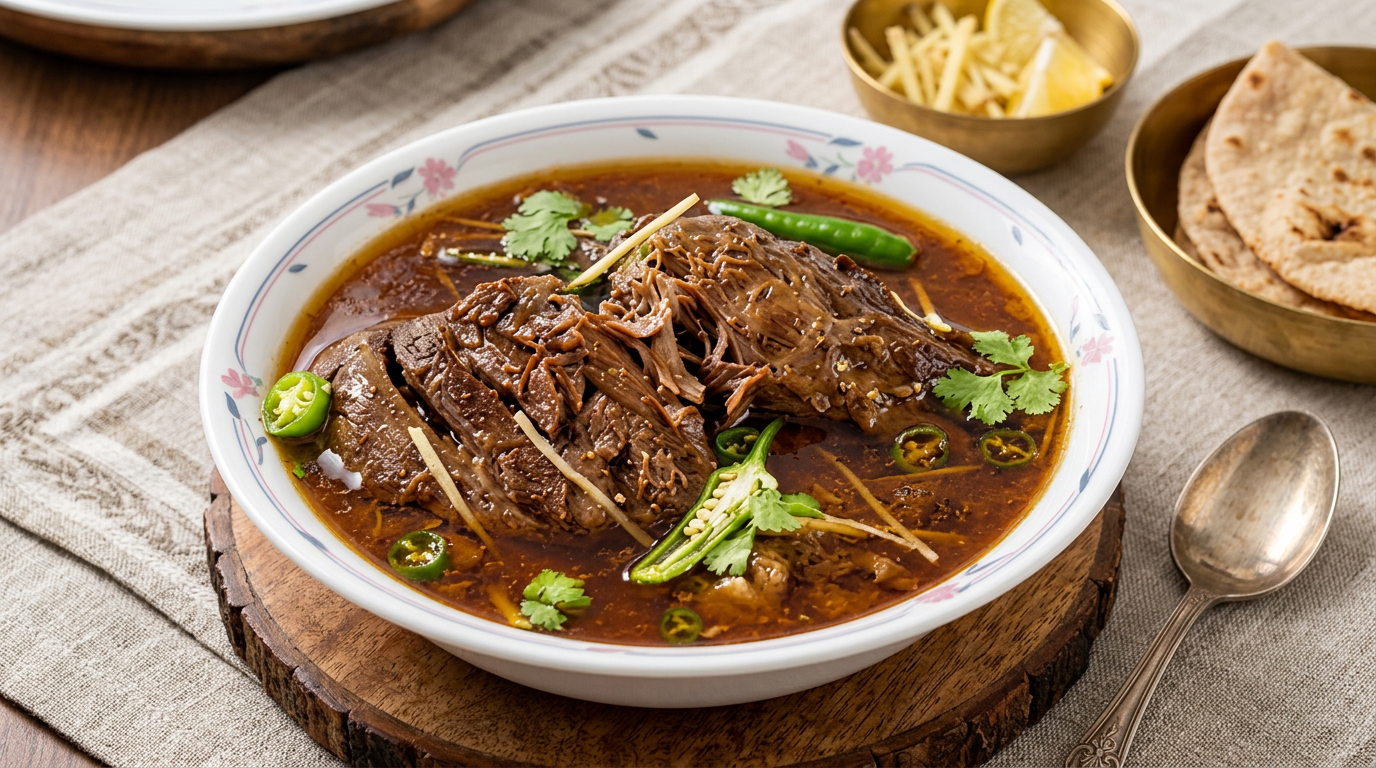
Traditional Pakistani Beef Nihari Recipe
Pakistani Beef Nihari is a rich, slow-cooked stew known for its deep flavor, tender beef, and fragrant blend of spices. Traditionally enjoyed as a hearty breakfast or special-occasion meal, nihari has become one of Pakistan’s most beloved comfort foods.
The secret to a delicious nihari is patience. Beef is cooked slowly with aromatic spices until it becomes incredibly tender and the broth develops a thick, flavorful consistency. The finished dish is usually served with fresh ginger, green chilies, cilantro, lemon, and warm naan.
While traditional nihari can take several hours to prepare, the process itself is quite simple. Most of the work happens while the beef gently simmers, allowing you to prepare the garnishes and bread while the stew develops its signature flavor.
Ingredients
For the nihari:
- 2½ pounds beef shank or stewing beef, cut into large pieces
- 4 tablespoons cooking oil or ghee
- 1 large onion, thinly sliced
- 1 tablespoon ginger paste
- 1 tablespoon garlic paste
- 2 tablespoons nihari spice mix
- 1 teaspoon red chili powder
- ½ teaspoon turmeric powder
- 1 teaspoon ground coriander
- ½ teaspoon ground cumin
- Salt to taste
- 6 cups water or beef stock
- 2 tablespoons all-purpose flour
- ½ cup water, for the flour mixture
For serving:
- Fresh ginger, cut into thin strips
- Fresh cilantro, chopped
- Green chilies, sliced
- Lemon wedges
- Fried onions, optional
- Warm naan or naan-style flatbread
Preparing the Beef
Start by cutting the beef into large pieces. Beef shank is particularly good for nihari because it contains connective tissue and marrow that contribute richness to the broth.
Heat the oil or ghee in a large heavy-bottomed pot over medium-high heat. Add the beef pieces and sear them for several minutes, turning occasionally.
The goal isn’t to cook the beef completely at this stage. You simply want to develop some color on the outside, which adds another layer of flavor to the finished nihari.
Once the beef has browned, transfer it to a plate temporarily if necessary.
Cooking the Aromatics
Reduce the heat to medium and add the sliced onion to the same pot. Cook until the onion becomes golden brown and soft.
Add the ginger paste and garlic paste. Stir continuously for about one minute until they become fragrant.
Be careful not to burn the garlic, as it can make the entire dish taste bitter.
Return the beef to the pot and stir it together with the onions, ginger, and garlic.
Adding the Nihari Spices
Add the nihari spice mix, red chili powder, turmeric, coriander, cumin, and salt.
Stir thoroughly so that the spices coat the beef.
Nihari spice blends can vary, but common ingredients include fennel, coriander, cumin, ginger, cardamom, cloves, cinnamon, black pepper, and other warming spices. Using a prepared nihari masala is a convenient option, while making your own spice blend gives you more control over the flavor.
Cook the beef and spices together for a few minutes. This allows the spices to toast slightly and become more aromatic.
Slow-Cooking the Nihari
Pour in the water or beef stock and bring the mixture to a gentle boil.
Once it begins boiling, reduce the heat to low and cover the pot.
Allow the beef to simmer slowly for approximately 3–4 hours, or until it becomes extremely tender.
The exact cooking time will depend on the cut and size of the beef pieces. Check occasionally and add a little more water if necessary.
The goal is to achieve beef that is tender enough to break apart easily with a spoon or fork.
Slow cooking also allows the spices to infuse the broth and gives the nihari its characteristic rich flavor.
Thickening the Nihari
Once the beef is tender, prepare the thickening mixture.
Combine the all-purpose flour with approximately ½ cup of water and whisk until completely smooth. There should be no lumps.
Slowly pour the flour mixture into the simmering nihari while stirring continuously.
Allow the stew to cook for another 10–15 minutes. As it simmers, the broth will gradually become thicker and silkier.
Don’t add all the flour mixture at once if you’re unsure about the desired consistency. You can add it gradually until the nihari reaches the thickness you prefer.
The finished stew should be rich and thick enough to coat the back of a spoon without becoming overly dense.
The Final Touches
Once the nihari has reached the desired consistency, taste it and adjust the salt or spices if needed.
Turn off the heat and allow it to rest for several minutes.
Traditionally, nihari is finished with fresh garnishes rather than being heavily decorated during cooking. Add thin strips of fresh ginger, chopped cilantro, and sliced green chilies directly to each serving.
A squeeze of fresh lemon juice adds brightness and helps balance the richness of the beef.
How to Serve Beef Nihari
Nihari is traditionally served piping hot with naan or another type of Pakistani flatbread.
Tear off a piece of warm naan and use it to scoop up the tender beef and rich broth. The bread is perfect for soaking up every bit of the flavorful gravy.
You can serve additional ginger, chilies, cilantro, and lemon at the table so everyone can customize their bowl.
For a larger Pakistani-style meal, nihari can be accompanied by simple salads, yogurt, or other traditional side dishes.
Tips for Making the Best Nihari
Choose the right beef. Beef shank is an excellent choice because the bones and connective tissue help create a rich, flavorful broth. Stewing beef can also work well.
Don’t rush the cooking. Nihari is traditionally a slow-cooked dish. Cooking it over low heat gives the beef time to become tender and allows the flavors to develop.
Keep the consistency balanced. Nihari should be thick and silky but still have enough broth to enjoy with naan.
Use fresh garnishes. Ginger, cilantro, green chilies, and lemon aren’t just decorative. They provide freshness that balances the richness of the stew.
Let it rest. Giving the nihari a few minutes to rest before serving allows the flavors to settle and the sauce to thicken slightly.
Can Nihari Be Made Ahead?
Absolutely. Nihari is an excellent make-ahead meal.
Once cooled, store it in an airtight container in the refrigerator. When you’re ready to serve it, reheat it gently on the stove until it is steaming hot.
Like many slow-cooked stews, nihari can taste even better the following day because the spices have more time to blend into the broth.
If the stew becomes too thick after refrigeration, add a small amount of water or stock while reheating until it reaches your preferred consistency.
Why Pakistani Nihari Is So Special
Nihari isn’t simply a beef stew. It represents the slow, comforting style of cooking that is central to many Pakistani meals.
Its rich broth, tender beef, warming spices, and fresh garnishes create layers of flavor in every spoonful. Although the recipe requires patience, the result is worth the wait.
Whether you’re preparing nihari for a weekend breakfast, a family gathering, or a special dinner, it is the kind of dish that fills the kitchen with an incredible aroma and brings everyone to the table.
Serve it with hot naan, plenty of fresh ginger and cilantro, a squeeze of lemon, and green chilies for a traditional finishing touch.
Once you’ve experienced homemade Pakistani Beef Nihari, you’ll understand why this slow-cooked classic remains one of the country’s most cherished comfort foods.
Leave a Reply