
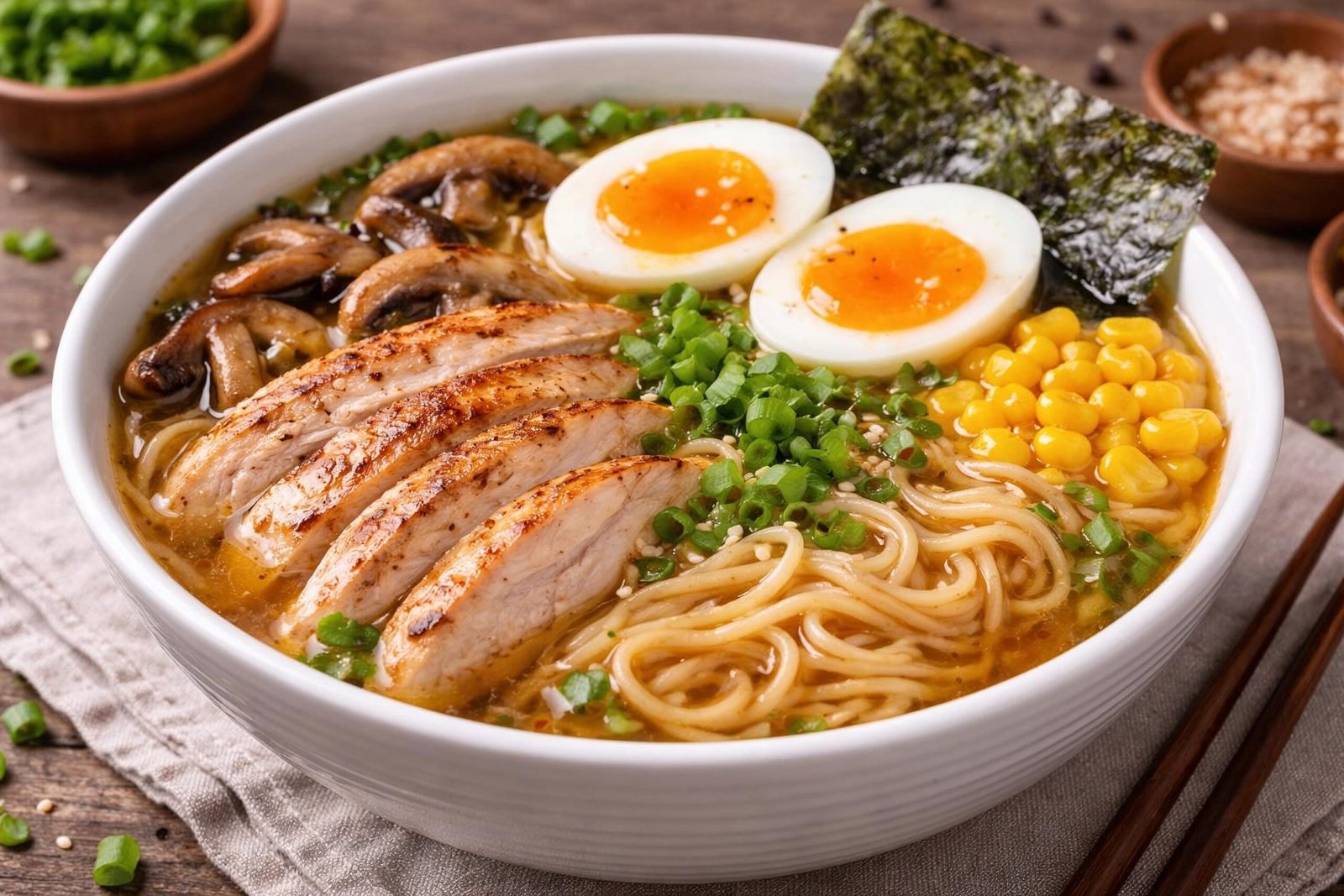
Ramen Noodles Recipe – Rich, Flavorful & Restaurant-Style
- Ramen is a famous Japanese noodle soup made with springy noodles served in a rich, flavorful broth and topped with ingredients such as tender chicken, soft-boiled eggs, mushrooms, corn, nori, and fresh spring onions. The combination of savory broth, chewy noodles, and colorful toppings creates a comforting and satisfying meal
- The secret to great homemade ramen is preparing a deeply flavored broth and cooking the noodles separately so they stay firm and springy. Fresh toppings added just before serving complete the authentic restaurant-style experience.
- This easy homemade recipe delivers a delicious bowl of ramen that’s perfect for lunch or dinner.
Recipe Information
| Details | Information |
|---|---|
| Cuisine | Japanese |
| Course | Main Course |
| Preparation Time | 20 Minutes |
| Cooking Time | 35 Minutes |
| Total Time | 55 Minutes |
| Difficulty | Medium |
| Servings | 4 |
| Calories | Approximately 540 kcal per serving |
Ingredients

For the Broth
| Ingredient | Quantity |
|---|---|
| Chicken Broth | 6 Cups |
| Soy Sauce | ¼ Cup |
| Sesame Oil | 1 tbsp |
| Garlic (Minced) | 4 Cloves |
| Fresh Ginger (Grated) | 1 tbsp |
| Miso Paste (Optional) | 2 tbsp |
| Salt | To Taste |
| Black Pepper | ½ tsp |
For the Noodles & Toppings
| Ingredient | Quantity |
|---|---|
| Ramen Noodles | 4 Portions |
| Cooked Chicken (Sliced) | 300 g |
| Soft-Boiled Eggs | 4 |
| Mushrooms (Sliced) | 200 g |
| Sweet Corn | 1 Cup |
| Baby Spinach | 2 Cups |
| Nori Sheets | 2 |
| Spring Onions (Sliced) | 2 |
| Sesame Seeds | 1 tbsp |
Equipment Needed
- Large saucepan
- Medium pot
- Fine strainer
- Ladle
- Sharp knife
- Cutting board
- Tongs
Step 1 – Prepare the Broth

- Heat the sesame oil in a large saucepan over medium heat. Add the minced garlic and grated ginger, cooking for 1 minute until fragrant.
- Pour in the chicken broth and soy sauce, then stir in the miso paste if using. Season with black pepper and a little salt if needed.
- Bring the broth to a gentle simmer and cook for 20–25 minutes, allowing the flavors to develop into a rich, savory broth.
Step 2 – Cook the Noodles

- Bring a separate pot of water to a rolling boil. Add the ramen noodles and cook according to the package instructions, usually 3–4 minutes, until just tender.
- Drain the noodles immediately and rinse briefly with warm water to remove excess starch. This helps prevent the noodles from becoming sticky.
- Divide the cooked noodles evenly among four serving bowls.
Step 3 – Prepare the Toppings

- While the broth is simmering, prepare all the toppings. Slice the cooked chicken, halve the soft-boiled eggs, slice the mushrooms, and wash the spinach.
- Briefly sauté the mushrooms for 3–4 minutes until tender, or add them directly to the simmering broth if preferred. Arrange all the toppings so they are ready for assembling the ramen bowls.
Ramen Noodles Recipe – Rich, Flavorful & Restaurant-Style (Part 2)
Step 4 – Assemble the Ramen Bowls

- Carefully ladle the hot broth over the cooked ramen noodles, making sure the noodles are completely covered.
- Arrange the sliced chicken, sautéed mushrooms, sweet corn, baby spinach, and soft-boiled egg halves neatly on top of the noodles. Place each topping separately to create a colorful, restaurant-style presentation.
- The hot broth will gently warm the toppings while keeping the vegetables fresh and vibrant.
Step 5 – Add the Final Toppings

- Place half a sheet of nori against the side of each bowl. Sprinkle sliced spring onions and toasted sesame seeds evenly over the ramen.
- If desired, drizzle a few drops of sesame oil or a little chili oil over the broth for extra flavor and aroma.
- The finished bowl should have a rich broth, tender noodles, colorful vegetables, juicy chicken, and beautifully arranged toppings.
Step 6 – Let the Flavors Blend

- Allow the ramen to rest for 1–2 minutes before serving. This gives the noodles time to absorb some of the flavorful broth while keeping their firm texture.
- Taste the broth and adjust the seasoning with a little extra soy sauce or salt if necessary.
- Serve immediately while the broth is piping hot and the noodles are perfectly tender.
Ramen Noodles Recipe – Rich, Flavorful & Restaurant-Style (Part 3)
Step 7 – Garnish and Final Touch

- Just before serving, sprinkle toasted sesame seeds and freshly sliced spring onions over each bowl. Add a sheet of nori, a few drops of sesame oil, and, if desired, a drizzle of chili oil for extra flavor.
- For a restaurant-style presentation, arrange the soft-boiled egg, chicken, mushrooms, corn, and spinach neatly around the noodles so each topping is clearly visible. The finished ramen should have a rich, steaming broth, springy noodles, and colorful toppings.
Step 8 – Serve and Enjoy

- Serve the ramen immediately while the broth is hot and the noodles are perfectly tender. Enjoy it with chopsticks and a soup spoon for the traditional experience.
- For a complete Japanese-style meal, pair your ramen with gyoza, edamame, seaweed salad, or steamed rice. Green tea or iced Japanese tea also complements the rich flavors beautifully.
👨🍳 Chef Tips
| Tip | Benefit |
|---|---|
| Use fresh broth | Richer flavor |
| Cook noodles separately | Prevents soggy noodles |
| Don’t overcook the noodles | Keeps them springy |
| Add toppings just before serving | Maintains freshness |
| Simmer the broth gently | Develops deeper flavor |
| Slice toppings evenly | Better presentation |
| Serve immediately | Best texture |
| Taste before serving | Adjust seasoning if needed |
⚠️ Common Mistakes
| Mistake | Solution |
|---|---|
| Overcooking noodles | Cook until just tender |
| Weak broth | Simmer longer with aromatics |
| Too much soy sauce | Add gradually and taste |
| Adding noodles too early | Assemble just before serving |
| Overcrowding the bowl | Arrange toppings neatly |
| Skipping garnishes | They add flavor and texture |
| Boiling the broth aggressively | Keep it at a gentle simmer |
| Cold toppings | Warm cooked toppings before serving |
🍜 Delicious Variations
- Chicken Ramen – Tender chicken with classic broth.
- Beef Ramen – Thinly sliced beef in rich broth.
- Spicy Ramen – Add chili oil or chili paste.
- Seafood Ramen – Shrimp, fish, and squid.
- Vegetarian Ramen – Vegetable broth with tofu.
- Miso Ramen – Rich broth flavored with miso paste.
- Shoyu Ramen – Soy sauce-based broth.
- Tonkotsu-Style Ramen – Creamy pork-inspired broth.
🍽️ Serving Suggestions
- Ramen pairs perfectly with:
- 🥟 Gyoza
- 🫛 Edamame
- 🥗 Seaweed Salad
- 🍚 Steamed Rice
- 🥒 Pickled Vegetables
- 🍤 Tempura
- 🍵 Green Tea
- 🥬 Stir-Fried Vegetables
❄️ Storage & Reheating
| Storage Method | Recommended Time |
|---|---|
| Broth (Refrigerator) | Up to 4 Days |
| Cooked Noodles | Up to 2 Days |
| Freezer (Broth Only) | Up to 3 Months |
- Store the broth and noodles separately in airtight containers. Reheat the broth until hot, cook or warm the noodles separately, then combine just before serving to keep the noodles from becoming soft.
🥗 Nutrition Facts
- Approximate values per serving
| Nutrient | Amount |
|---|---|
| Calories | 540 kcal |
| Protein | 32 g |
| Carbohydrates | 52 g |
| Fat | 21 g |
| Fiber | 4 g |
| Sugar | 5 g |
| Sodium | 1,150 mg |
- Nutrition values are approximate and may vary depending on the ingredients used.
❓ Frequently Asked Questions
1. Can I use instant ramen noodles?
Yes. Discard the seasoning packet and use the homemade broth for better flavor.
2. How do I make the broth richer?
Simmer it longer and add miso paste or extra aromatics like garlic and ginger.
3. Can I make vegetarian ramen?
Yes. Use vegetable broth and add tofu, mushrooms, and extra vegetables.
4. Can I prepare ramen ahead of time?
Yes. Store the broth and toppings separately, then cook the noodles fresh before serving.
5. Why are my noodles soggy?
They were cooked too long or left sitting in the broth. Assemble just before eating.
6. Can I freeze ramen?
Freeze only the broth. Fresh noodles and vegetables are best prepared when serving.
7. What toppings can I add?
Soft-boiled eggs, chicken, beef, tofu, corn, mushrooms, spinach, bamboo shoots, and nori are all excellent choices.
8. Which noodles are best for ramen?
Fresh ramen noodles provide the best texture, but dried ramen noodles also work well.
Leave a Reply