
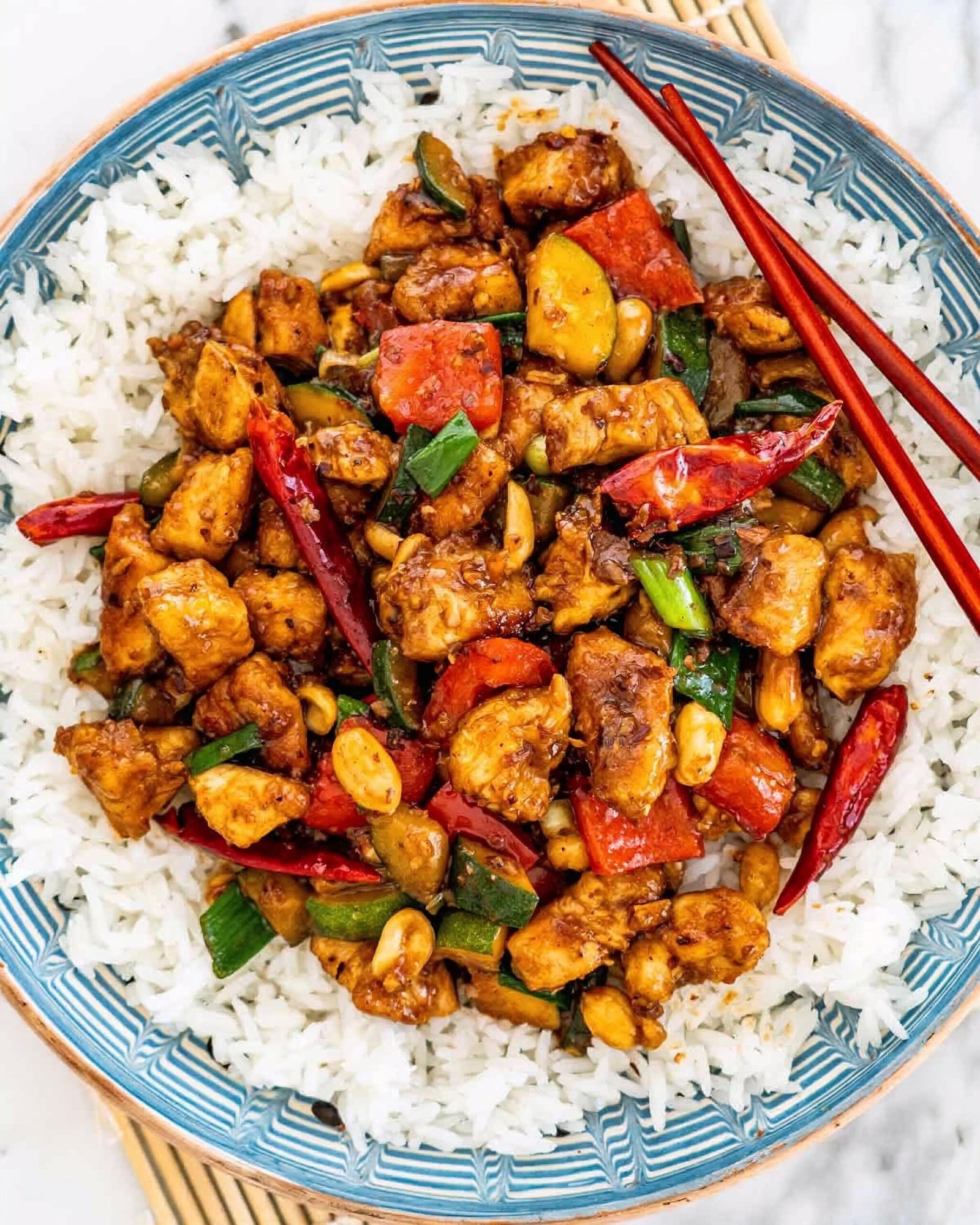
Kung Pao Chicken Recipe – Spicy, Savory & Restaurant-Style
- Kung Pao Chicken is a famous Chinese stir-fry dish made with tender marinated chicken, roasted peanuts, colorful vegetables, dried red chilies, and a flavorful sweet, savory, and slightly spicy sauce. Originating from Sichuan cuisine, this dish is loved around the world for its perfect balance of heat, sweetness, tanginess, and crunchy texture.
- The secret to authentic restaurant-style Kung Pao Chicken is marinating the chicken, preparing the sauce beforehand, and cooking everything quickly over high heat. The combination of soy sauce, vinegar, hoisin sauce, garlic, ginger, and roasted peanuts creates a rich and satisfying flavor that pairs perfectly with steamed rice or noodles.
- This homemade recipe is simple, delicious, and ready in under an hour, making it perfect for weeknight dinners or special occasions.
Recipe Information
| Details | Information |
|---|---|
| Cuisine | Chinese (Sichuan-Inspired) |
| Course | Main Course |
| Preparation Time | 20 Minutes |
| Marinating Time | 20 Minutes |
| Cooking Time | 15 Minutes |
| Total Time | 55 Minutes |
| Difficulty | Easy |
| Servings | 4 |
| Calories | Approximately 460 kcal per serving |
Ingredients

For the Chicken Marinade
| Ingredient | Quantity |
|---|---|
| Boneless Chicken Breast | 500 g |
| Soy Sauce | 1 tbsp |
| Cornstarch | 1 tbsp |
| Sesame Oil | 1 tsp |
| Black Pepper | ½ tsp |
For the Sauce
| Ingredient | Quantity |
|---|---|
| Soy Sauce | 3 tbsp |
| Hoisin Sauce | 2 tbsp |
| Rice Vinegar | 2 tbsp |
| Brown Sugar | 1 tbsp |
| Cornstarch | 1 tsp |
| Water | ¼ Cup |
For Stir-Fry
| Ingredient | Quantity |
|---|---|
| Vegetable Oil | 2 tbsp |
| Garlic (Minced) | 4 Cloves |
| Ginger (Minced) | 1 tbsp |
| Dried Red Chilies | 8–10 |
| Bell Pepper (Diced) | 1 Large |
| Onion (Diced) | 1 Medium |
| Roasted Peanuts | 1 Cup |
| Spring Onions (Sliced) | 2 |
Equipment Needed
- Wok or large skillet
- Mixing bowls
- Measuring cups and spoons
- Wooden spatula
- Sharp knife
- Cutting board
Step 1 – Marinate the Chicken

- Cut the chicken breast into bite-sized cubes and place them in a mixing bowl. Add the soy sauce, cornstarch, sesame oil, and black pepper. Mix thoroughly until every piece of chicken is evenly coated.
- Cover the bowl and let the chicken marinate for 20 minutes. The marinade helps tenderize the chicken while allowing it to absorb flavor. The cornstarch also creates a light coating that keeps the chicken juicy during stir-frying.
Step 2 – Prepare the Kung Pao Sauce

- In a separate bowl, combine the soy sauce, hoisin sauce, rice vinegar, brown sugar, cornstarch, and water. Whisk until the sugar and cornstarch dissolve completely.
- Set the sauce aside so it is ready to pour into the wok later. Having the sauce prepared in advance is important because stir-frying happens quickly over high heat.
Step 3 – Cook the Chicken

- Heat the vegetable oil in a wok or large skillet over high heat. Add the marinated chicken in a single layer and cook for 5–6 minutes, stirring occasionally until the pieces are lightly golden and cooked through.
- Remove the cooked chicken from the wok and transfer it to a plate. Leave a small amount of oil in the wok for cooking the vegetables in the next step.
Kung Pao Chicken Recipe – Spicy, Savory & Restaurant-Style (Part 2)
Step 4 – Stir-Fry the Vegetables and Chilies

- Return the wok to high heat and add a little more vegetable oil if needed. Add the dried red chilies and stir-fry for 20–30 seconds until fragrant, being careful not to burn them.
- Next, add the minced garlic and ginger, stirring continuously for another 30 seconds until aromatic. Add the diced onion and bell pepper, then stir-fry for 2–3 minutes. The vegetables should remain slightly crisp while developing a light char around the edges.
- The combination of garlic, ginger, chilies, and vegetables creates the signature aroma and flavor that makes Kung Pao Chicken so delicious.
Step 5 – Add the Sauce and Chicken

- Give the prepared sauce a quick stir to redistribute the cornstarch, then pour it into the hot wok. Stir continuously as the sauce begins to bubble and thicken within 1–2 minutes.
- Return the cooked chicken to the wok and toss well so every piece becomes evenly coated with the glossy sauce. Add the roasted peanuts and continue stir-frying for another 2 minutes, allowing the peanuts to absorb some of the sauce while keeping their crunch.
- Taste the dish and adjust the seasoning if needed by adding a little soy sauce for more saltiness or a pinch of brown sugar for extra sweetness.
Step 6 – Finish the Stir-Fry

- Add the sliced spring onions and gently toss everything together for 30–60 seconds. The spring onions should remain bright green and slightly crisp, adding freshness to the finished dish.
- Turn off the heat once the sauce is thick, glossy, and evenly coating the chicken and vegetables. The finished Kung Pao Chicken should feature tender chicken, crisp vegetables, crunchy peanuts, and a rich, spicy-savory sauce.
- Transfer the stir-fry to a serving platter while it’s still hot, ready for the final garnish and presentation.
Kung Pao Chicken Recipe – Spicy, Savory & Restaurant-Style (Part 3)
Step 7 – Garnish and Final Touch

- Transfer the hot Kung Pao Chicken to a large serving bowl or individual plates. Sprinkle extra roasted peanuts over the top to add a satisfying crunch and enhance the nutty flavor. Garnish generously with freshly sliced spring onions and, if desired, a light sprinkle of toasted sesame seeds for extra aroma and presentation.
- For a more authentic restaurant-style appearance, place a few whole dried red chilies on top as garnish. The finished dish should have glossy, sauce-coated chicken, vibrant vegetables, crunchy peanuts, and bright green spring onions that create an attractive contrast.
- Serve immediately while hot to enjoy the best texture and flavor.
Step 8 – Serve and Enjoy

- Serve Kung Pao Chicken hot with freshly steamed jasmine rice, egg fried rice, or stir-fried noodles. It also pairs wonderfully with vegetable fried rice, garlic noodles, or steamed broccoli for a complete Chinese-style meal.
- For family dinners or special occasions, serve it alongside spring rolls, hot and sour soup, or dumplings. Every bite should deliver tender chicken, crunchy peanuts, crisp vegetables, and a perfectly balanced sweet, savory, tangy, and mildly spicy sauce.
- This dish is best enjoyed immediately after cooking while the vegetables remain crisp and the sauce is glossy.
👨🍳 Chef Tips
| Tip | Benefit |
|---|---|
| Marinate the chicken | Keeps it tender and juicy |
| Prepare the sauce before cooking | Stir-frying happens very quickly |
| Use high heat | Creates authentic wok flavor |
| Don’t overcook the vegetables | Keeps them crisp |
| Roast the peanuts | Enhances their flavor and crunch |
| Stir the sauce before adding | Redistributes the cornstarch |
| Cook in small batches | Prevents overcrowding the wok |
| Serve immediately | Best taste and texture |
⚠️ Common Mistakes
| Mistake | Solution |
|---|---|
| Overcooking the chicken | Cook only until just done |
| Burning the garlic or chilies | Stir constantly over high heat |
| Watery sauce | Allow it to simmer until thickened |
| Overcrowding the wok | Cook in batches if necessary |
| Skipping the marinade | Marinate for at least 20 minutes |
| Soft vegetables | Stir-fry quickly to keep them crisp |
| Adding peanuts too early | Add near the end to keep them crunchy |
| Using low heat | High heat produces the best stir-fry |
🥢 Delicious Variations
- Classic Kung Pao Chicken – Traditional chicken with peanuts and chilies.
- Spicy Kung Pao Chicken – Add extra dried chilies or chili flakes.
- Cashew Kung Pao Chicken – Replace peanuts with roasted cashews.
- Shrimp Kung Pao – Substitute chicken with shrimp.
- Beef Kung Pao – Use thinly sliced beef instead of chicken.
- Vegetarian Kung Pao – Replace chicken with tofu or mushrooms.
- Extra Vegetable Kung Pao – Add zucchini, carrots, and snap peas.
- Low-Carb Kung Pao – Serve over cauliflower rice.
🍽️ Serving Suggestions
- Kung Pao Chicken pairs perfectly with:
- 🍚 Steamed Jasmine Rice
- 🍳 Egg Fried Rice
- 🍜 Garlic Noodles
- 🥟 Vegetable Dumplings
- 🥬 Stir-Fried Bok Choy
- 🥦 Steamed Broccoli
- 🥢 Spring Rolls
- 🥣 Hot and Sour Soup
❄️ Storage & Reheating
| Storage Method | Recommended Time |
|---|---|
| Refrigerator | Up to 3 Days |
| Freezer | Up to 2 Months |
- Allow the Kung Pao Chicken to cool completely before storing it in an airtight container. Refrigerate for up to 3 days or freeze for up to 2 months. Reheat in a wok or skillet over medium heat until thoroughly heated. Add a small splash of water if the sauce becomes too thick.
🥗 Nutrition Facts
- Approximate values per serving
| Nutrient | Amount |
|---|---|
| Calories | 460 kcal |
| Protein | 34 g |
| Carbohydrates | 18 g |
| Fat | 28 g |
| Fiber | 3 g |
| Sugar | 8 g |
| Sodium | 820 mg |
- Nutrition values are approximate and may vary depending on the ingredients used.
❓ Frequently Asked Questions
1. Is Kung Pao Chicken very spicy?
It has a mild to medium level of heat, but you can easily adjust the number of dried chilies to suit your taste.
2. Can I use chicken thighs instead of chicken breast?
Yes. Boneless, skinless chicken thighs are even juicier and work very well.
3. What type of peanuts should I use?
Unsalted roasted peanuts are ideal because they stay crunchy and balance the sauce.
4. Can I make this dish ahead of time?
Yes. Prepare it a day ahead and reheat gently before serving.
5. Can I freeze Kung Pao Chicken?
Yes. Store it in an airtight container and freeze for up to 2 months.
6. What vegetables can I add?
Carrots, zucchini, mushrooms, snap peas, broccoli, and baby corn are all great additions.
7. Why is my sauce too thin?
Allow it to simmer for another minute or add a small cornstarch slurry if needed.
8. Can I make it gluten-free?
Yes. Use gluten-free soy sauce (tamari) and gluten-free hoisin sauce.
Leave a Reply