
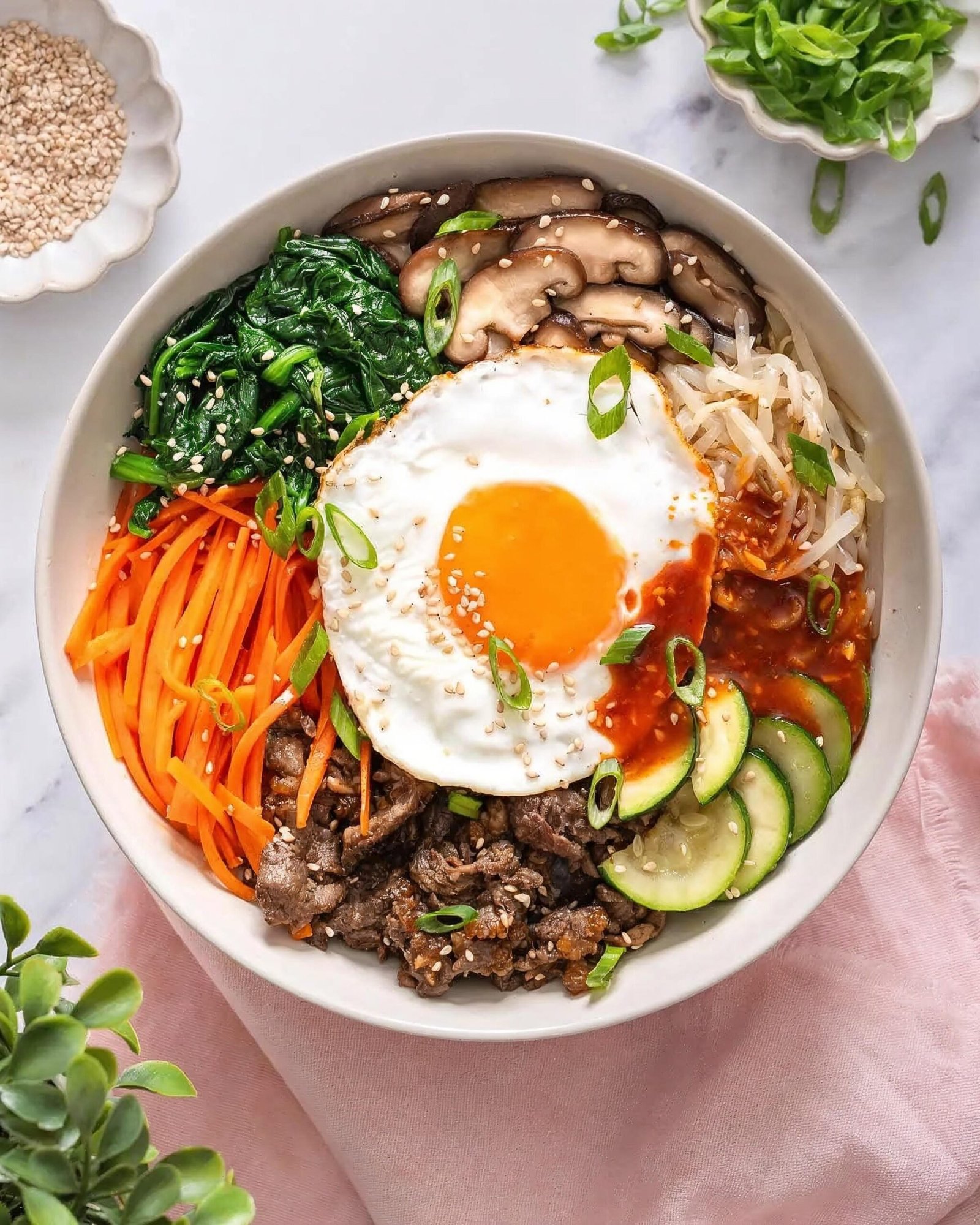
Bibimbap Recipe – Colorful, Healthy & Authentic Korean Style
- Bibimbap is one of Korea’s most iconic dishes, featuring steamed rice topped with seasoned vegetables, marinated beef, a fried egg, and spicy gochujang sauce. The name Bibimbap means “mixed rice,” as all the ingredients are stirred together just before eating.
- The secret to authentic Bibimbap is preparing each topping separately to preserve its individual flavor, texture, and color. When mixed together with gochujang, sesame oil, and warm rice, every bite becomes rich, fresh, and perfectly balanced.
- This homemade recipe is ideal for lunch or dinner and offers a nutritious meal packed with vegetables, protein, and bold Korean flavors.
Recipe Information
| Details | Information |
|---|---|
| Cuisine | Korean |
| Course | Main Course |
| Preparation Time | 30 Minutes |
| Cooking Time | 25 Minutes |
| Total Time | 55 Minutes |
| Difficulty | Medium |
| Servings | 4 |
| Calories | Approximately 620 kcal per serving |
Ingredients

For the Rice & Beef
| Ingredient | Quantity |
|---|---|
| Cooked Short-Grain Rice | 4 Cups |
| Beef (Thinly Sliced) | 300 g |
| Soy Sauce | 2 tbsp |
| Sesame Oil | 1 tbsp |
| Garlic (Minced) | 2 Cloves |
| Brown Sugar | 1 tbsp |
For the Vegetables
| Ingredient | Quantity |
|---|---|
| Spinach | 2 Cups |
| Carrots (Julienned) | 2 |
| Zucchini (Julienned) | 1 |
| Bean Sprouts | 2 Cups |
| Mushrooms (Sliced) | 200 g |
For Garnish & Sauce
| Ingredient | Quantity |
|---|---|
| Eggs | 4 |
| Gochujang | 4 tbsp |
| Sesame Oil | 2 tsp |
| Sesame Seeds | 1 tbsp |
| Green Onions (Sliced) | 2 |
Equipment Needed
- Large skillet
- Medium saucepan
- Frying pan
- Mixing bowls
- Cutting board
- Sharp knife
- Spatula
Step 1 – Marinate the Beef

- In a bowl, combine the thinly sliced beef with soy sauce, sesame oil, minced garlic, and brown sugar.
- Mix well until every slice is coated. Cover and refrigerate for 20–30 minutes to allow the flavors to develop while you prepare the vegetables.
Step 2 – Prepare the Vegetables

- Wash and prepare all the vegetables.
- Blanch the spinach and bean sprouts in boiling water for 1–2 minutes, then drain and squeeze out excess water.
- Lightly sauté the carrots, zucchini, and mushrooms separately with a small amount of sesame oil until just tender but still colorful and slightly crisp.
Step 3 – Cook the Beef

- Heat a skillet over medium-high heat and cook the marinated beef for 4–5 minutes, stirring frequently until browned and fully cooked.
- Transfer the beef to a plate and keep it warm while preparing the remaining ingredients.
Bibimbap Recipe – Colorful, Healthy & Authentic Korean Style (Part 2)
Step 4 – Fry the Eggs

- Heat a small non-stick frying pan over medium heat.
- Crack the eggs into the pan and cook until the whites are fully set while the yolks remain soft and runny, about 3–4 minutes. If you prefer firmer yolks, cook for an additional minute.
- Set the eggs aside until ready to assemble the bowls.
Step 5 – Assemble the Bibimbap

- Divide the warm cooked rice evenly among four serving bowls.
- Arrange the cooked beef, spinach, carrots, zucchini, bean sprouts, and mushrooms in separate sections over the rice, creating a colorful presentation. Place one fried egg in the center of each bowl.
- Add 1 tablespoon of gochujang to each serving and drizzle lightly with sesame oil.
Step 6 – Add the Final Seasoning

- Sprinkle toasted sesame seeds and sliced green onions over each bowl.
- For extra flavor, drizzle a little more sesame oil over the top. Serve the Bibimbap immediately while the rice is hot.
- Just before eating, mix all the ingredients together thoroughly so the vegetables, beef, egg, rice, and gochujang combine into one flavorful dish.
Bibimbap Recipe – Colorful, Healthy & Authentic Korean Style (Part 3)
Step 7 – Garnish and Final Touch

- Once the Bibimbap is assembled, garnish each bowl with extra toasted sesame seeds and freshly sliced green onions. If desired, add thin strips of roasted seaweed (gim) or a few slices of fresh cucumber for additional texture and color.
- Drizzle a few drops of sesame oil over the top for a rich, nutty aroma. The finished Bibimbap should feature vibrant vegetables, tender beef, fluffy rice, a perfectly cooked fried egg, and a generous spoonful of gochujang.
Step 8 – Serve and Enjoy

- Serve Bibimbap immediately while the rice is hot. Just before eating, thoroughly mix the rice, vegetables, beef, egg, sesame oil, and gochujang together so every bite is packed with balanced flavors.
- For a complete Korean meal, serve with kimchi, miso soup, pickled radish, cucumber salad, or other Korean side dishes (banchan).
👨🍳 Chef Tips
| Tip | Benefit |
|---|---|
| Use freshly cooked short-grain rice | Best texture |
| Cook each vegetable separately | Preserves flavor and color |
| Marinate the beef | Makes it tender and flavorful |
| Keep the egg yolk runny | Adds richness when mixed |
| Use authentic gochujang | Traditional Korean flavor |
| Add sesame oil at the end | Enhances aroma |
| Arrange toppings neatly | Beautiful presentation |
| Mix just before eating | Even flavor in every bite |
Common Mistakes
| Mistake | Solution |
|---|---|
| Overcooking vegetables | Keep them slightly crisp |
| Using cold rice | Always use warm rice |
| Too much gochujang | Add gradually to taste |
| Overcooking the egg | Leave the yolk soft if preferred |
| Skipping sesame oil | Essential for authentic flavor |
| Not seasoning vegetables | Lightly season each one |
| Overcrowding the bowl | Arrange toppings separately |
| Forgetting to mix before eating | Mix thoroughly for the best taste |
🍲 Delicious Variations
- Classic Beef Bibimbap – Traditional Korean version.
- Chicken Bibimbap – Replace beef with grilled chicken.
- Seafood Bibimbap – Add shrimp or squid.
- Vegetarian Bibimbap – Use tofu and extra vegetables.
- Spicy Bibimbap – Add extra gochujang and chili flakes.
- Dolsot Bibimbap – Served in a hot stone bowl with crispy rice.
- Mushroom Bibimbap – Extra mushrooms for a hearty meal.
- Vegan Bibimbap – Plant-based protein with vegetables.
🍽️ Serving Suggestions
- Bibimbap pairs perfectly with:
- 🥬 Kimchi
- 🍚 Steamed Rice
- 🥣 Miso Soup
- 🥒 Pickled Radish
- 🥗 Cucumber Salad
- 🌿 Roasted Seaweed
- 🫛 Edamame
- 🍵 Green Tea
❄️ Storage & Reheating
| Storage Method | Recommended Time |
|---|---|
| Refrigerator | Up to 3 Days |
| Freezer | Not Recommended |
- Store the rice, beef, and vegetables separately in airtight containers in the refrigerator for up to 3 days. Reheat the rice and beef before assembling the bowl. Fresh vegetables and the fried egg are best prepared just before serving.
🥗 Nutrition Facts
- Approximate values per serving
| Nutrient | Amount |
|---|---|
| Calories | 620 kcal |
| Protein | 28 g |
| Carbohydrates | 62 g |
| Fat | 26 g |
| Fiber | 6 g |
| Sugar | 8 g |
| Sodium | 980 mg |
- Nutrition values are approximate and may vary depending on the ingredients used.
❓ Frequently Asked Questions
1. What does Bibimbap mean?
Bibimbap means “mixed rice” in Korean because all the ingredients are mixed together before eating.
2. Can I make Bibimbap vegetarian?
Yes. Replace the beef with tofu, mushrooms, or your favorite vegetables.
3. What is the best rice for Bibimbap?
Short-grain Korean or Japanese rice works best because it has a slightly sticky texture.
4. Can I prepare the ingredients in advance?
Yes. Cook the vegetables and beef ahead of time, then assemble the bowls just before serving.
5. Is Bibimbap spicy?
The spice level depends on the amount of gochujang you use. Adjust it to your preference.
6. What is Dolsot Bibimbap?
Dolsot Bibimbap is served in a hot stone bowl that creates a crispy layer of rice at the bottom.
7. Can I use other proteins?
Absolutely. Chicken, pork, shrimp, tofu, or mushrooms all work well.
8. Why should I mix Bibimbap before eating?
Mixing combines the rice, vegetables, beef, egg, and gochujang so every bite has a balanced blend of flavors and textures.
Leave a Reply