
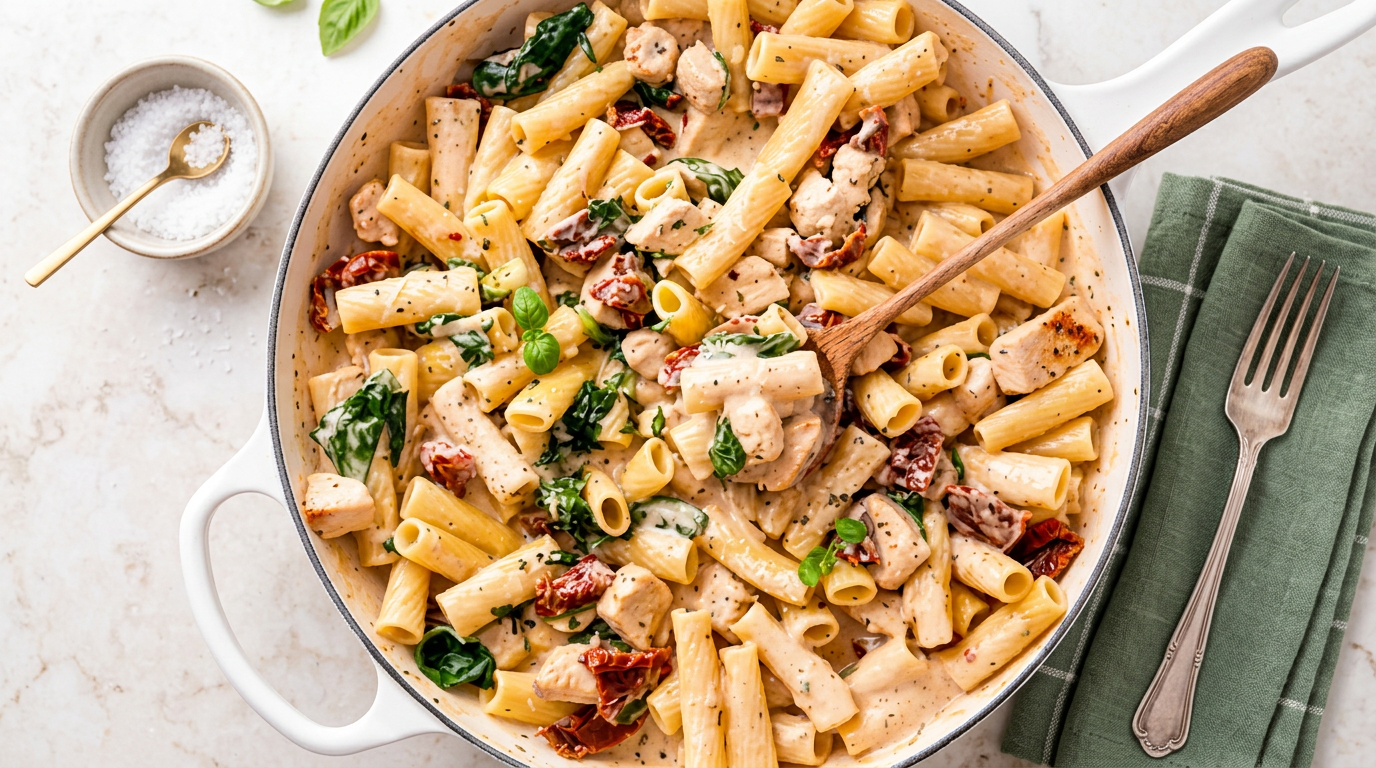
One-Pot Tuscan Chicken Pasta recipes
Some nights call for a recipe that tastes like it took real effort but actually just needs one pan and about 30 minutes. This Tuscan chicken pasta is exactly that. Juicy seared chicken, a creamy sun-dried tomato and spinach sauce, and pasta that cooks right in the same pot, soaking up all that flavor as it goes. It’s the kind of dish that makes a Tuesday feel a little more special without adding a single extra dish to the sink.
I started making this on nights when I wanted something that felt indulgent but didn’t want to spend the evening standing over multiple pots. The one-pot method isn’t just about convenience, either — cooking the pasta directly in the sauce means it absorbs so much more flavor than boiling it separately and adding sauce on top afterward. Every bite ends up seasoned all the way through.
Why this recipe works
1. Searing the chicken first builds the flavor base. Those browned bits left in the pan (what chefs call fond) are where a huge amount of the dish’s savory depth comes from. Don’t skip this step or rush it — a good sear matters more than you’d think for a “quick” recipe.
2. Cooking the pasta in the sauce, not separately. This is the defining trick of one-pot pasta dishes. As the pasta simmers directly in the broth and cream mixture, it releases starch that naturally thickens the sauce, and it absorbs flavor the whole way through instead of just sitting under a layer of sauce on top.
3. Sun-dried tomatoes do a lot of heavy lifting. They bring a concentrated, slightly tangy sweetness that regular fresh tomatoes can’t replicate in a quick weeknight dish. Even a small amount goes a long way.
4. Adding spinach at the very end. Fresh spinach wilts down almost instantly, so stirring it in right before serving keeps it vibrant and prevents it from turning into a gray, overcooked mess.
What you’ll need
- 1 1/2 pounds boneless, skinless chicken breasts, cut into bite-sized pieces
- 2 tablespoons olive oil
- 1 teaspoon Italian seasoning
- Salt and pepper, to taste
- 3 cloves garlic, minced
- 1/2 cup sun-dried tomatoes, chopped (oil-packed works especially well)
- 2 1/2 cups chicken broth
- 1 cup heavy cream
- 8 ounces penne or short pasta of your choice
- 2 cups fresh baby spinach
- 1/2 cup grated Parmesan, plus more for serving
- Red pepper flakes, optional, for a little heat
Everything here is fairly standard, with sun-dried tomatoes being the one ingredient you might not already have on hand. They’re shelf-stable and worth keeping stocked once you start making this regularly.
How to make Tuscan chicken pasta
Step 1: Season and sear the chicken. Toss the chicken pieces with Italian seasoning, salt, and pepper. Heat the olive oil in a large deep skillet or Dutch oven over medium-high heat, then add the chicken in a single layer. Sear for 5–6 minutes, turning occasionally, until golden brown on the outside and cooked through. Remove and set aside.
Step 2: Build the aromatics. In the same pan, add the garlic and sun-dried tomatoes. Stir for about 30 seconds, scraping up any browned bits from the bottom of the pan — that’s where a lot of the flavor is hiding.
Step 3: Add the liquid and pasta. Pour in the chicken broth and heavy cream, then stir in the uncooked pasta. Bring to a gentle simmer.
Step 4: Simmer until the pasta is tender. Cover and cook for 12–15 minutes, stirring occasionally to prevent sticking, until the pasta is al dente and the sauce has thickened. If it looks too thick before the pasta is fully cooked, add a splash more broth.
Step 5: Return the chicken to the pan. Stir the cooked chicken back in along with any juices that collected on the plate.
Step 6: Finish with spinach and Parmesan. Stir in the fresh spinach and Parmesan, letting the residual heat wilt the spinach down, about 1–2 minutes. Taste and adjust salt, pepper, and red pepper flakes as needed.
Step 7: Serve hot. Top with extra Parmesan and a crack of black pepper, and serve straight from the pot.
Tips for the best one-pot pasta
- Use a wide, heavy-bottomed pan. This helps the pasta cook evenly without scorching on the bottom.
- Stir occasionally while the pasta simmers. One-pot pasta needs a bit more attention than boiling pasta separately, since it can stick if left alone too long.
- Don’t overcook the chicken during the sear. It’ll finish cooking when you return it to the pan later, so a hot, quick sear is all you need at this stage.
- Adjust the cream-to-broth ratio to taste. More broth makes it lighter, more cream makes it richer — both work well.
- Add the spinach at the very end, not before. Adding it too early leaves you with mushy, overcooked greens.
Storage and reheating
This dish keeps well in an airtight container in the fridge for up to 3 days. The sauce will thicken as it sits, so when reheating, add a splash of broth or cream to loosen it back up. Reheat gently on the stovetop over medium-low heat, stirring occasionally, or in the microwave in 30-second bursts. It’s not the best candidate for freezing, since cream-based sauces can separate when thawed, so this one’s best enjoyed within a few days.
Variations to try
- Swap the protein. Shrimp or Italian sausage both work beautifully in place of chicken.
- Make it lighter. Substitute half-and-half or whole milk for the heavy cream, and add a tablespoon of flour to the broth to help it thicken.
- Add mushrooms. Sautéed mushrooms added with the garlic bring an earthy depth that pairs well with the sun-dried tomatoes.
- Try a different pasta shape. Rigatoni, farfalle, or rotini all hold the sauce nicely if penne isn’t on hand.
- Dairy-free option. Use full-fat coconut milk in place of the cream and nutritional yeast in place of Parmesan for a dairy-free version that still feels rich.
Frequently asked questions
Can I use pre-cooked or rotisserie chicken? Yes — skip the searing step and stir the cooked chicken in at the same point you’d normally return it to the pan, just to warm it through.
Why is my sauce too thin? Give it a few more minutes to simmer uncovered, which lets some of the liquid reduce. The sauce will also continue to thicken slightly as it cools.
Can I double this recipe? You can, though you may need a larger pot and a slightly longer simmer time for the pasta to cook evenly — stir a bit more often to prevent sticking.
This one has become a genuine weeknight staple in my house, and I think it’ll earn a spot in yours too. Let me know in the comments if you make it, and what protein swap you tried!
Leave a Reply