
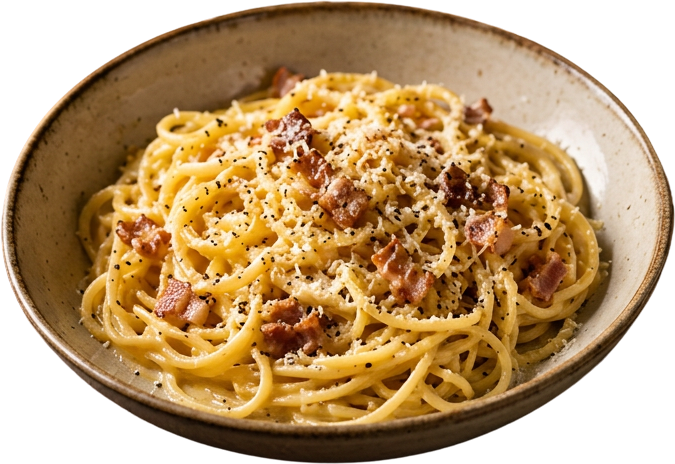
Authentic Spaghetti Carbonara (No Cream, I Promise)
Let’s clear something up right away: real carbonara does not have cream in it. I know a lot of recipes out there sneak it in for insurance, but once you learn the actual technique, you won’t need it — and honestly, the traditional method tastes better anyway. Silky, glossy, peppery, deeply savory. Just eggs, cheese, cured pork, black pepper, and pasta, transformed into something that feels far more indulgent than its short ingredient list suggests.
This is one of those recipes that looks intimidating on paper because everyone’s heard the horror stories about scrambled eggs ruining the whole pot. But once you understand what’s actually happening — and follow a couple of non-negotiable steps — it becomes one of the fastest, most reliable dinners in your rotation. We’re talking 20 minutes, five main ingredients, and a result that tastes like it came from a trattoria in Rome.
Why this recipe works
Carbonara is a masterclass in technique over complexity. There’s no long ingredient list to hide behind, so every step matters. Here’s what makes the difference between a creamy, glossy sauce and a plate of scrambled eggs with pasta:
1. Take the pan off the heat before adding the eggs. This is the single most important rule. The residual heat of the pasta and pan is enough to gently cook the eggs into a sauce — direct heat will scramble them instantly. If you remember nothing else from this post, remember this.
2. Use starchy pasta water, not cream. The pasta water is doing double duty here: it loosens the egg-cheese mixture into a pourable sauce, and the starch in it helps everything emulsify into something glossy instead of clumpy. Always reserve more than you think you’ll need before draining.
3. Render the guanciale (or pancetta) slowly. You want the fat to melt out and crisp up the meat, not just fry it. That rendered fat becomes part of the sauce, so don’t rush this step or drain it away.
4. Toss constantly and add liquid gradually. Once the eggs go in, you’re basically making a very fast, savory custard. Keep the pasta moving and add pasta water a splash at a time until you hit the right consistency.
What you’ll need
- 1 pound spaghetti
- 8 ounces guanciale, cut into small strips or cubes (pancetta is a fine substitute if guanciale isn’t available)
- 4 large eggs, plus 2 additional egg yolks
- 1 1/2 cups finely grated Pecorino Romano, plus more for serving
- Freshly cracked black pepper, a generous amount
- Salt, for the pasta water
That’s genuinely it. No cream, no butter, no garlic in the traditional version (though a lot of home cooks add a light garlic touch — more on that below). The quality of your Pecorino Romano matters a lot here since it’s carrying so much of the flavor, so it’s worth reaching for the good stuff.
How to make spaghetti carbonara
Step 1: Boil the pasta. Bring a large pot of well-salted water to a boil and cook the spaghetti until just shy of al dente — it’ll finish cooking in the pan. Before draining, scoop out at least 1 1/2 cups of the starchy pasta water and set it aside.
Step 2: Whisk the egg and cheese mixture. While the pasta cooks, whisk together the eggs, egg yolks, and grated Pecorino Romano in a large bowl until smooth. Add a generous amount of black pepper — carbonara should have real pepper presence, not just a light dusting.
Step 3: Render the guanciale. In a large skillet over medium heat, cook the guanciale slowly, stirring occasionally, until the fat has rendered out and the pieces are golden and crisp, about 6–8 minutes. Turn off the heat.
Step 4: Combine pasta and guanciale. Add the drained spaghetti directly into the skillet with the guanciale and its rendered fat. Toss well so every strand gets coated.
Step 5: Take the pan off the heat, then add the egg mixture. This is the step that makes or breaks the dish. With the pan completely off the heat (some people even move it to a cool burner or trivet for insurance), pour in the egg and cheese mixture while tossing constantly with tongs. The residual heat will gently cook the eggs into a silky sauce.
Step 6: Loosen with pasta water. Add reserved pasta water a splash at a time, tossing continuously, until the sauce is glossy and coats the pasta smoothly. You’re looking for a sauce that clings to the noodles rather than pooling at the bottom or clumping.
Step 7: Serve immediately. Carbonara waits for no one — plate it right away, top with extra Pecorino and more cracked black pepper, and serve hot.
Tips for perfect carbonara every time
- Have everything measured and ready before you start. Once the pasta is drained, the process moves fast, and there’s no time to grate cheese mid-toss.
- Warm your serving bowls. A cold bowl can cool the sauce too quickly and cause it to seize up.
- Don’t walk away from the guanciale. It goes from perfectly rendered to burnt faster than you’d think.
- If the sauce looks too thick, add more pasta water. If it looks too thin, a little more cheese will thicken it right back up.
- Room temperature eggs blend more smoothly than cold-from-the-fridge eggs, so pull them out ahead of time if you can.
Common mistakes to avoid
- Adding the eggs while the pan is still on the heat. This is the number one cause of scrambled carbonara.
- Using cream as a safety net. It masks the technique instead of teaching it, and traditional carbonara doesn’t need it.
- Skipping the pasta water. Without it, the sauce has nothing to emulsify with and turns clumpy.
- Overcooking the guanciale until it’s dry. You want crisp, not burnt — burnt fat turns bitter fast.
Variations to try
While purists will say carbonara shouldn’t change, home cooks have plenty of reasonable tweaks:
- Pancetta or bacon in place of guanciale if that’s what you have on hand.
- A light garlic infusion — some cooks sauté a smashed garlic clove in the fat, then remove it before adding pasta.
- Bucatini or rigatoni instead of spaghetti for a heartier bite.
- A mix of Pecorino and Parmesan if you want a slightly milder, nuttier flavor.
Frequently asked questions
Can I make carbonara ahead of time? Not really — the sauce is best fresh and doesn’t reheat well, since the eggs can overcook and the texture turns rubbery. This is a cook-and-serve-immediately dish.
Why did my sauce turn into scrambled eggs? The pan was too hot when you added the egg mixture. Next time, remove it from the heat completely, and even let it cool for 30 seconds before adding the eggs.
Is guanciale really necessary? It gives the most authentic flavor, but pancetta is a very acceptable substitute if guanciale isn’t available near you.
Once you nail the technique, this becomes a genuine 20-minute weeknight dinner that feels like a treat every time. Let me know in the comments if you try it — and whether you’re Team Guanciale or Team Pancetta!
Leave a Reply